
Which Dog Sport?
Canicross
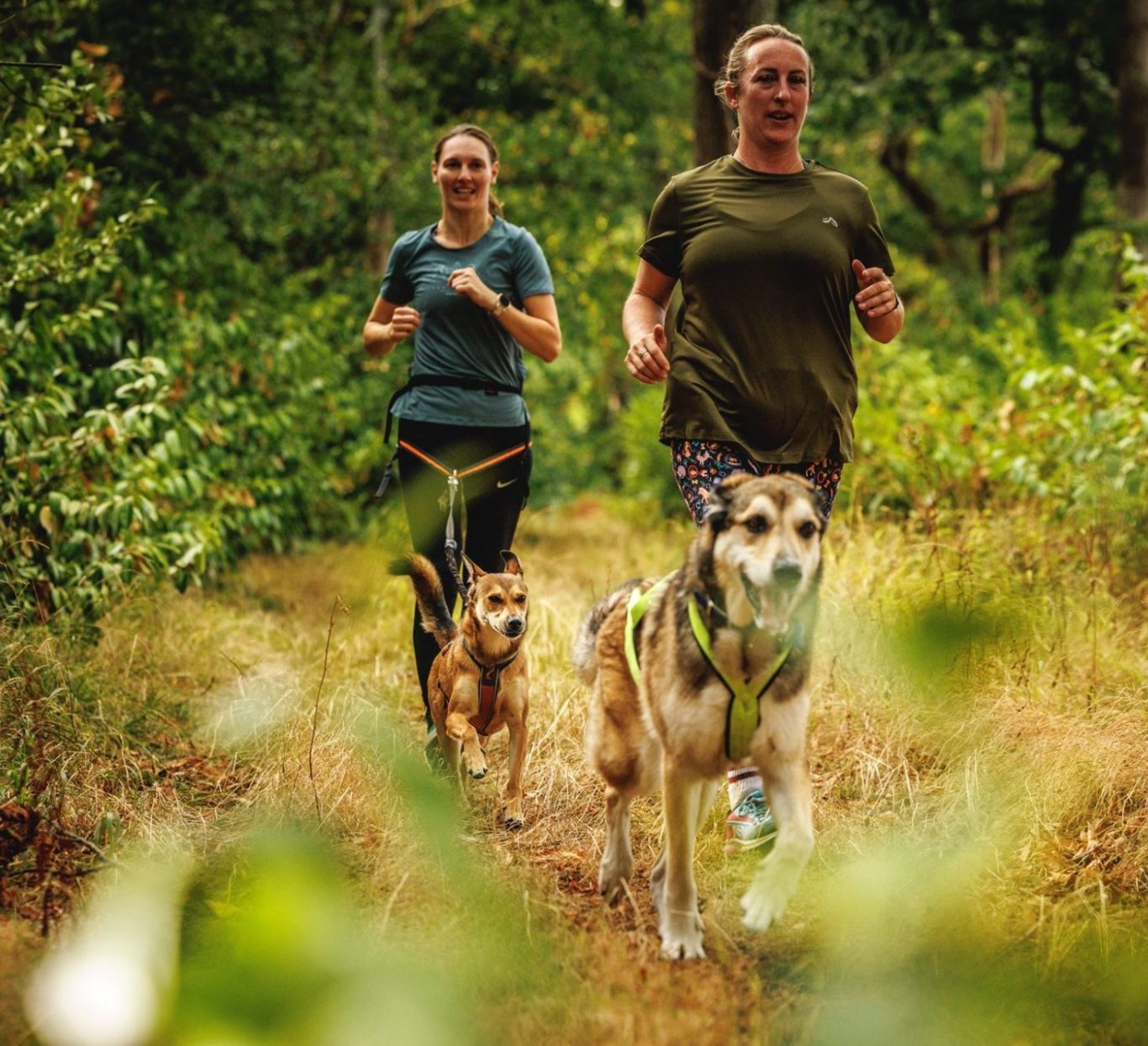
Canicross is a form of cross-country running in which a person is joined to a dog by a bungee line and the dog wears a comfortable pulling harness, enabling both to run as a team. Originating from off-season training for sled dogs, it has grown into a popular mass-participation sport that sits at the intersection of running and canine sports, with events ranging from informal club runs to organised races and championships across the UK and Europe. The sport is accessible to a wide range of runners and dogs, provided the animal is fit, enjoys running and has basic obedience skills.
Participation in canicross offers clear benefits: improved fitness for both human and dog, strengthened bond and enhanced behavioural control for the canine, and the opportunity to train outdoors across varied terrain. Safety and appropriate kit are essential — a well-fitting harness for the dog, a waist belt for the runner, and a shock-absorbing bungee line are standard — and training should progress gradually with attention to paws, joints and weather conditions. Many local clubs and groups offer coaching, social runs and advice on conditioning and competition, making it easy to get involved in this increasingly popular, family-friendly sport.
Bikejor
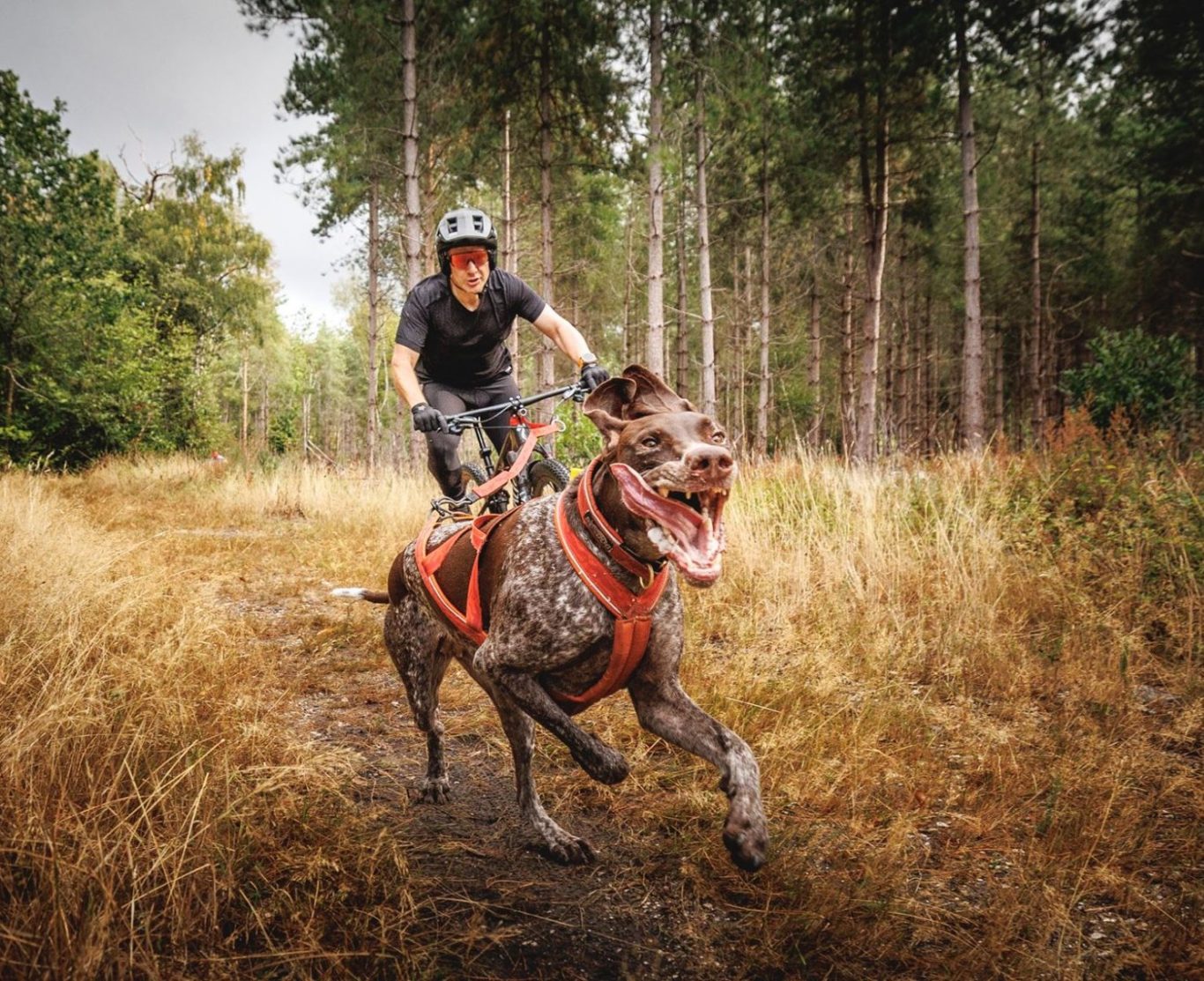
Bikejor is a dog-powered cycling discipline in which one or more dogs run ahead of a bicycle, attached by a specialised harness and a tug line that connects to the rider or the bike's head tube. Originating from skijoring and mushing, Bikejor demands speed, coordination and quick decision-making as riders negotiate off-road trails, forest tracks and purpose-built courses; participants typically use sturdy mountain bikes or fatbikes with robust tyres and suspension to cope with rough terrain.
As a sport, Bikejor combines athletic training for both dog and handler, requiring progressive conditioning, clear voice and line commands and strict attention to canine welfare and local regulations; competitions range from short sprints and time trials to longer-distance events organised by clubs and regional federations. Safety equipment such as a bungee line, helmet and protective clothing for riders, regular checks of harness fit and good road-awareness are essential, and many participants join local groups to practise technique responsibly and promote ethical, sustainable participation.
Scooterjoring
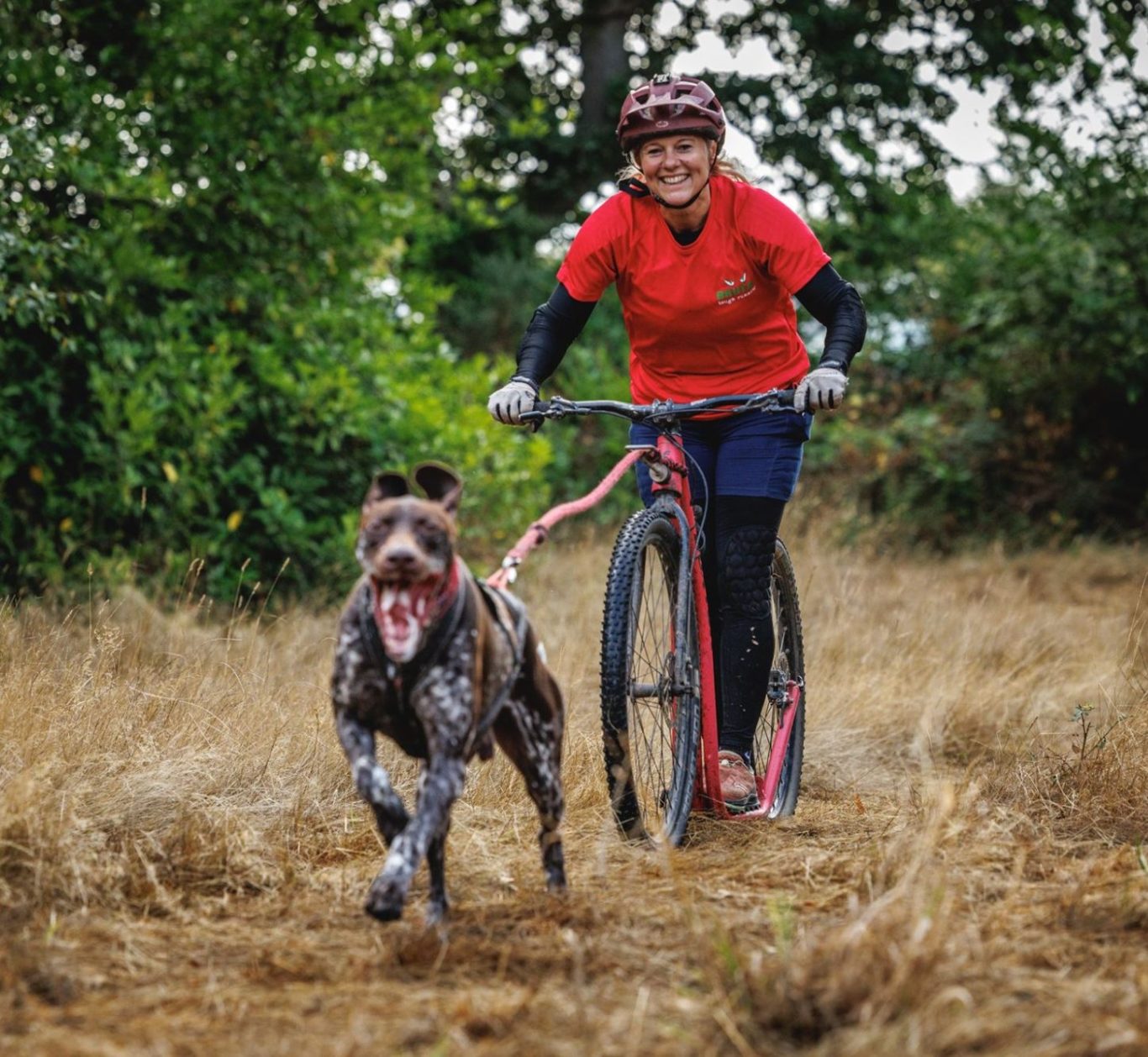
Scooterjoring is an increasingly popular outdoor sport in which a rider stands on a kick scooter and is pulled along by an animal — most commonly a dog, though horses are used in some disciplines. Borrowing its basic idea from skijoring, the activity is practiced on trails, parks and off‑road courses and can be arranged as time trials, cross‑country runs or agility-style events. Success depends on clear communication between rider and animal, good balance and the ability to pace effort over varying terrain.
Equipment and safety are central to the sport: a robust scooter with large pneumatic tyres, a secure animal harness and a shock-absorbing line are essential, along with rider protective kit such as a helmet, gloves and pads. Responsible practice emphasises animal welfare — gradual training, appropriate fitness and positive reinforcement — as well as respect for local bylaws and other users of shared spaces. Scooterjoring is often organised by clubs and informal groups, making it an accessible, community-minded way to enjoy exercise and the outdoors.
Rigs
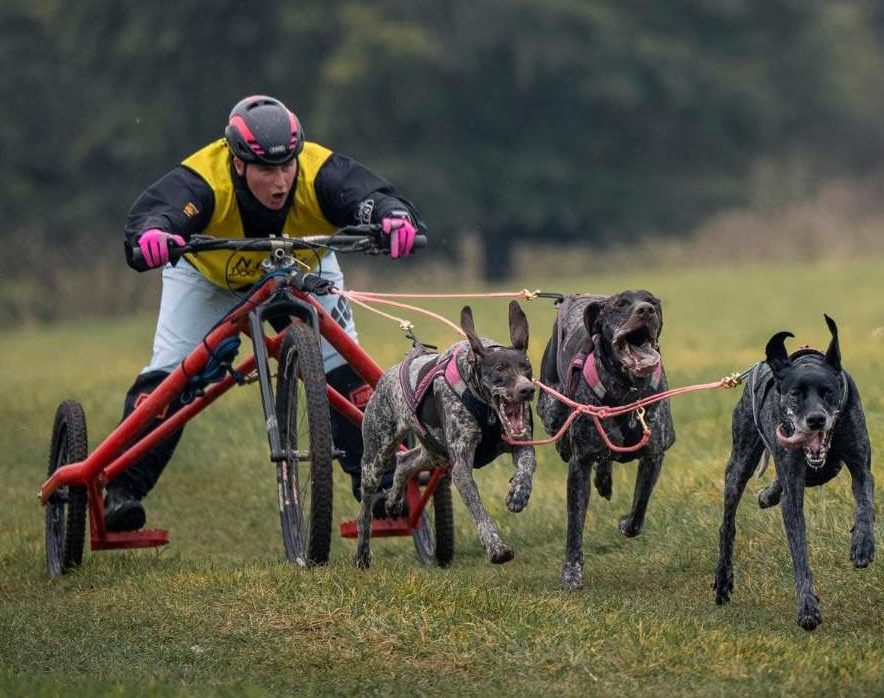
Dryland mushing rigs are the ultimate snow-free alternative to traditional dog sleds. Specially engineered with three or four stable wheels, a low center of gravity, and high-performance hydraulic brakes, these non-motorized vehicles allow large teams of two to eight dogs to run safely at high speeds. They provide the perfect platform for year-round training and competitive racing, ensuring working dogs stay fit, focused, and conditioned even when the trails are bare.
For the musher, a professional rig offers unparalleled control and safety on rugged dirt trails. Drivers stand securely on a rear platform, guiding the team with bicycle-style steering while a robust front brushbow protects the line. Built to handle heavy resistance and high-power dog teams, a dryland rig transforms off-season training into an exhilarating, adrenaline-fueled sport that keeps the spirit of the pack alive.